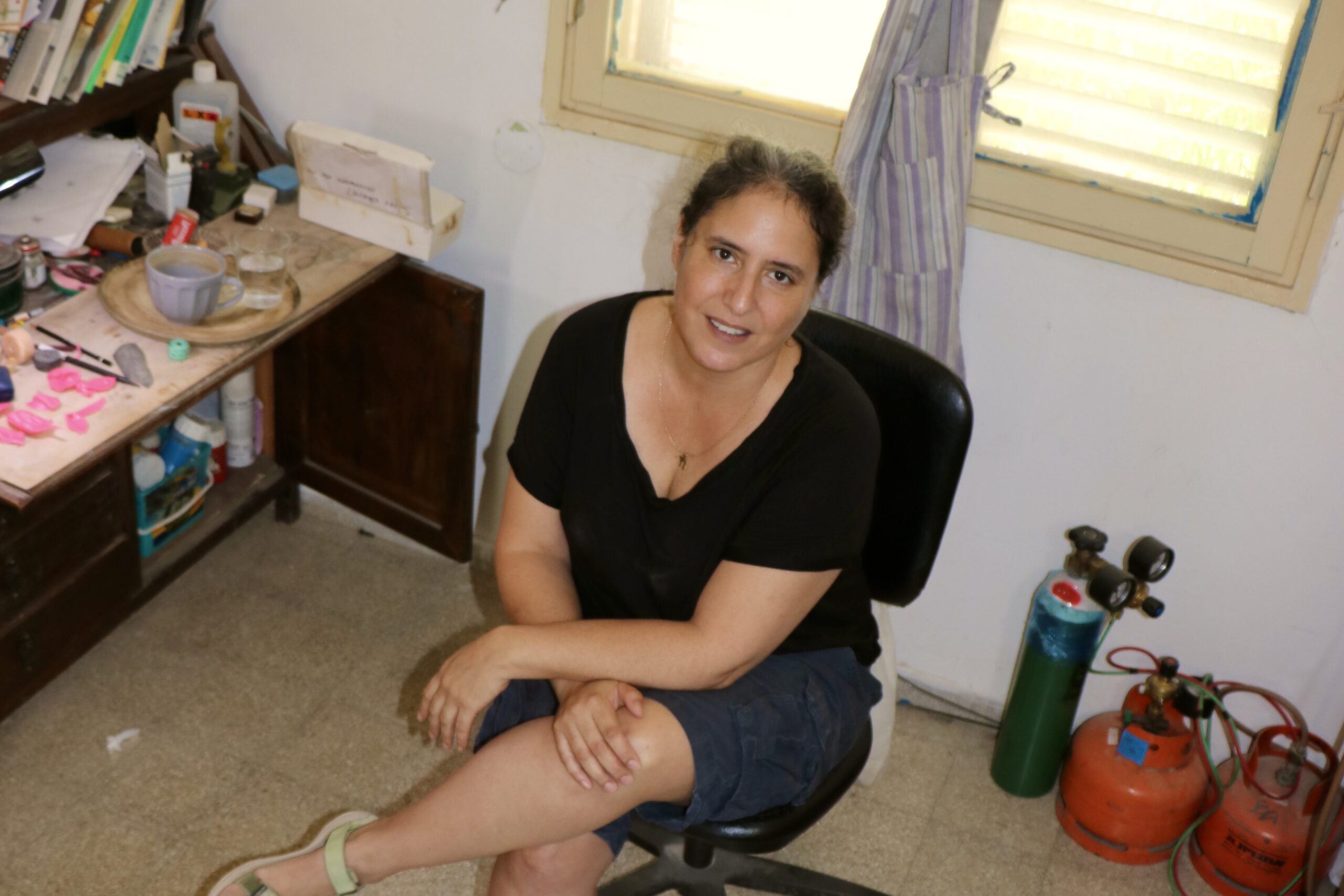
Hi Noga,
How long have you been in this field?
Depends how you count… finished my BA in 2008-2009.
What was the moment you fell in love with metalsmithing?
I fell in love with metal first, as a material. When I worked as an ice cream maker, one day I was just staring at this stainless steel machine – boiling on top, freezing on the bottom – and it blew my mind that a material could handle that. Sounds kind of dumb, I know… even in my admissions interview the teachers laughed at me for it. As for falling in love with the craft itself – hard to point to one moment. Every time I sit down at the bench I feel it. Something about metal going from solid to liquid, the focus it demands, it’s the ultimate mix of emotion and sensuality with logic and engineering.
What do you do when you need a break, to rest or think? There’s no breaks. I rest in the car. I love zoning out when I get the chance, and the pieces also start in my head, while driving or on the road.
What part of the process do you avoid?
Always the beginning, and the finishing touches – there’s commitment and risk in both, and that makes me doubt myself.
Favorite tool?
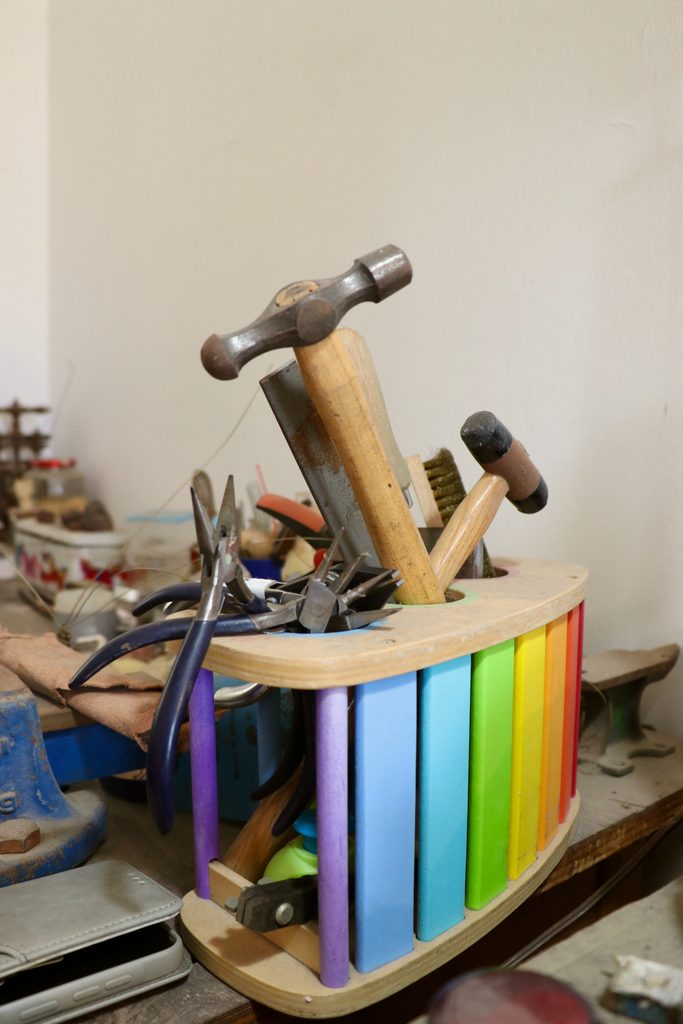
The jeweler’s saw – sawing is life itself, literally and figuratively. The saw is like a personal seismograph, or a lie detector. It exposes everything.
Material you keep coming back to?
Basalt – the local stone of the Upper Galilee. I attribute mystical properties to it; I feel that its use throughout distant and recent history has instilled such properties in it – but also its source – lava, a destructive material that erupted from the earth and became a building stone, has something mystical about it.
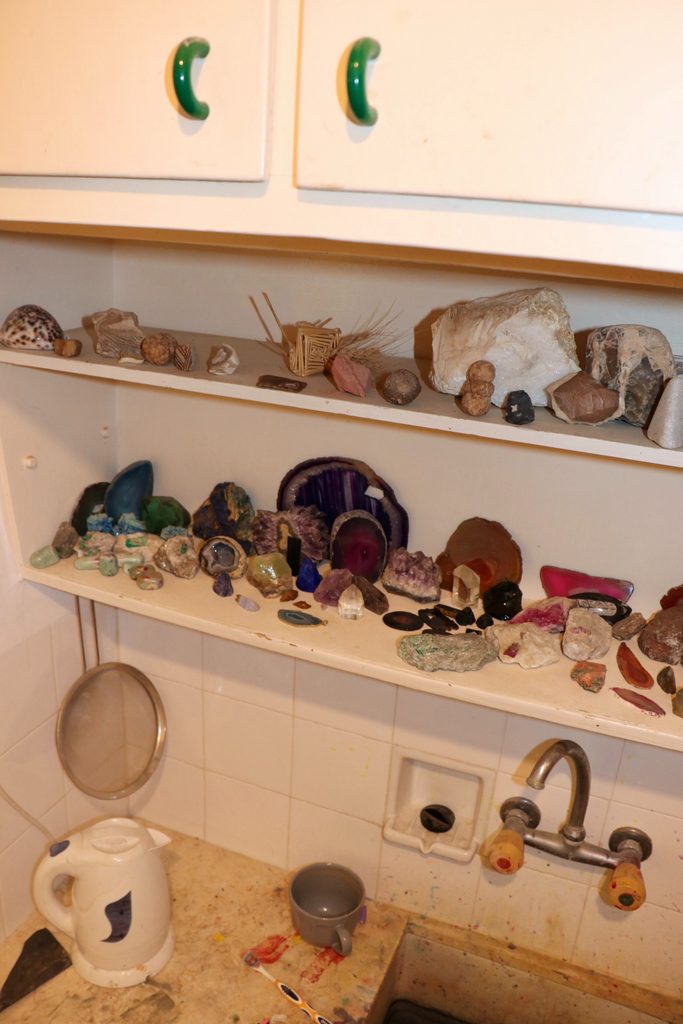
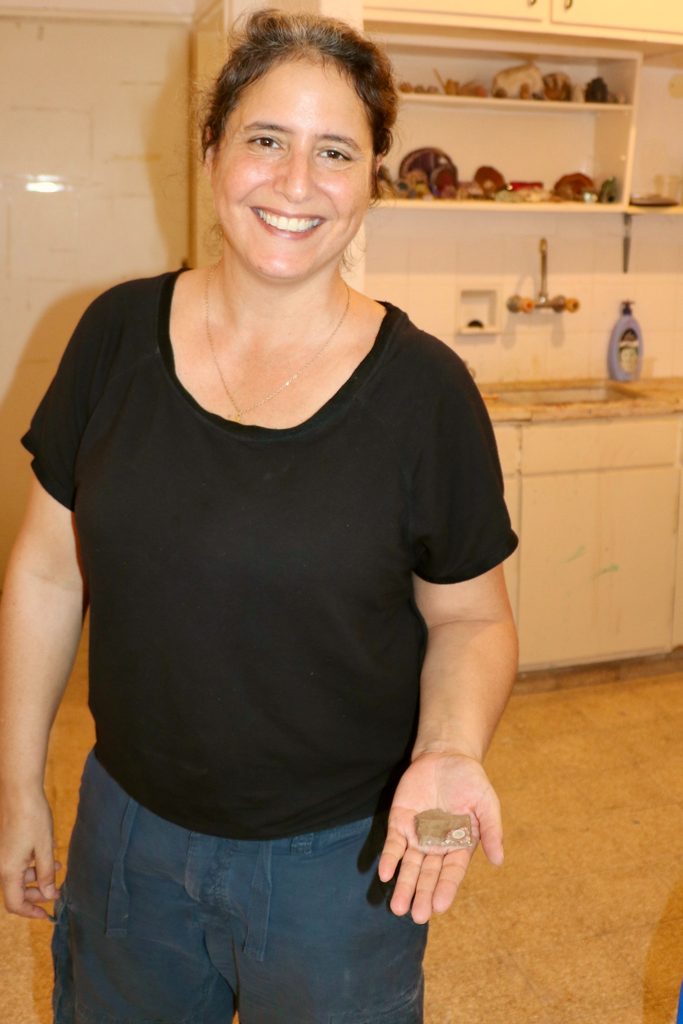
What do you do with scraps from other pieces?
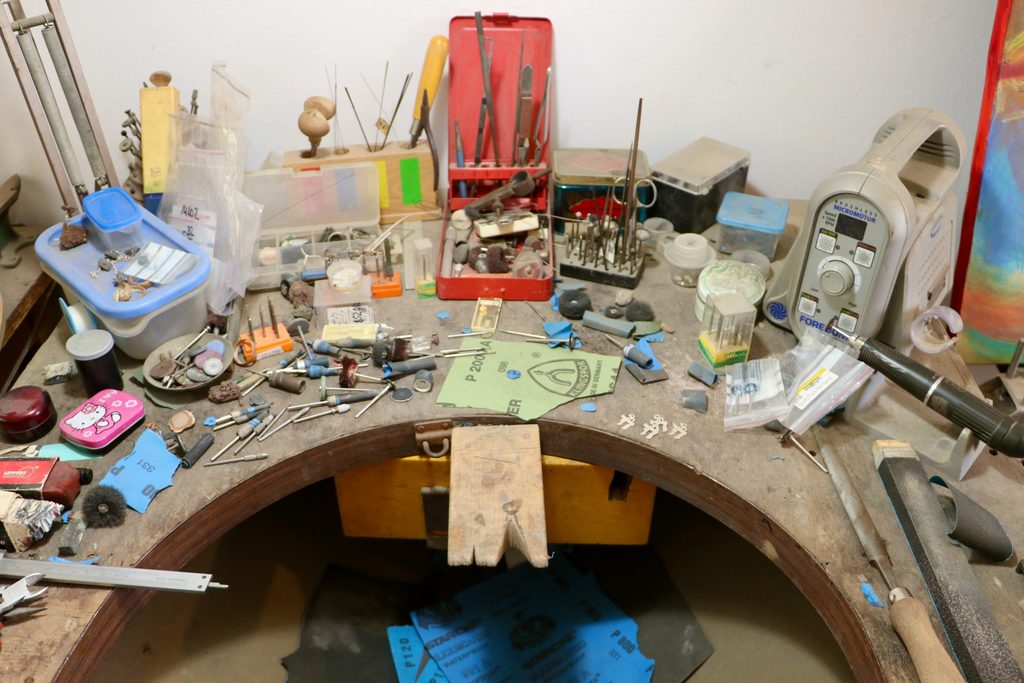
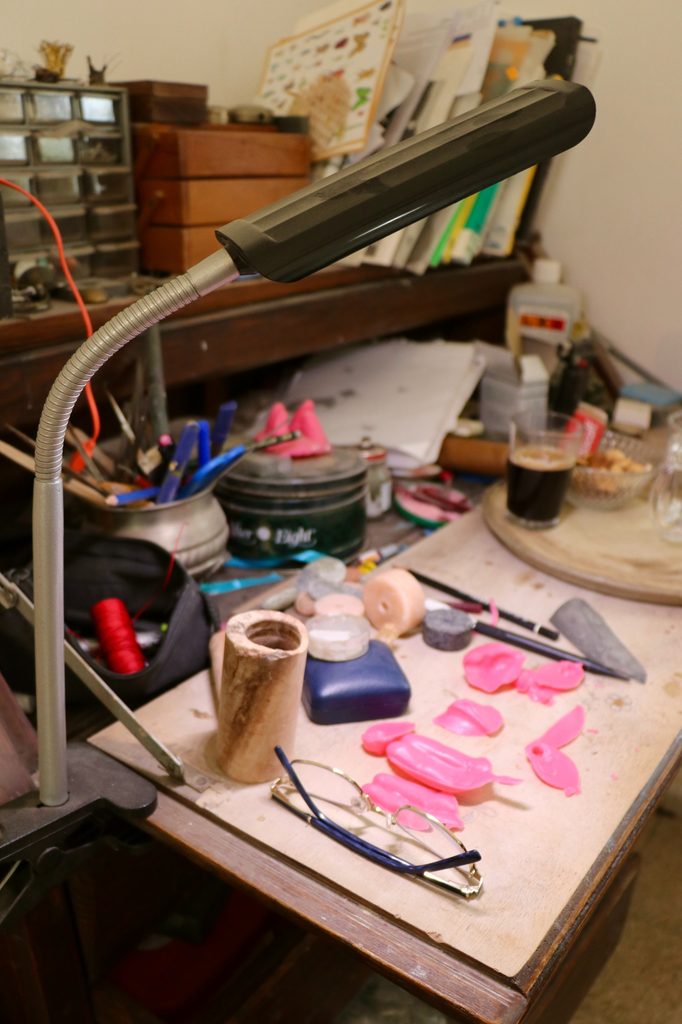
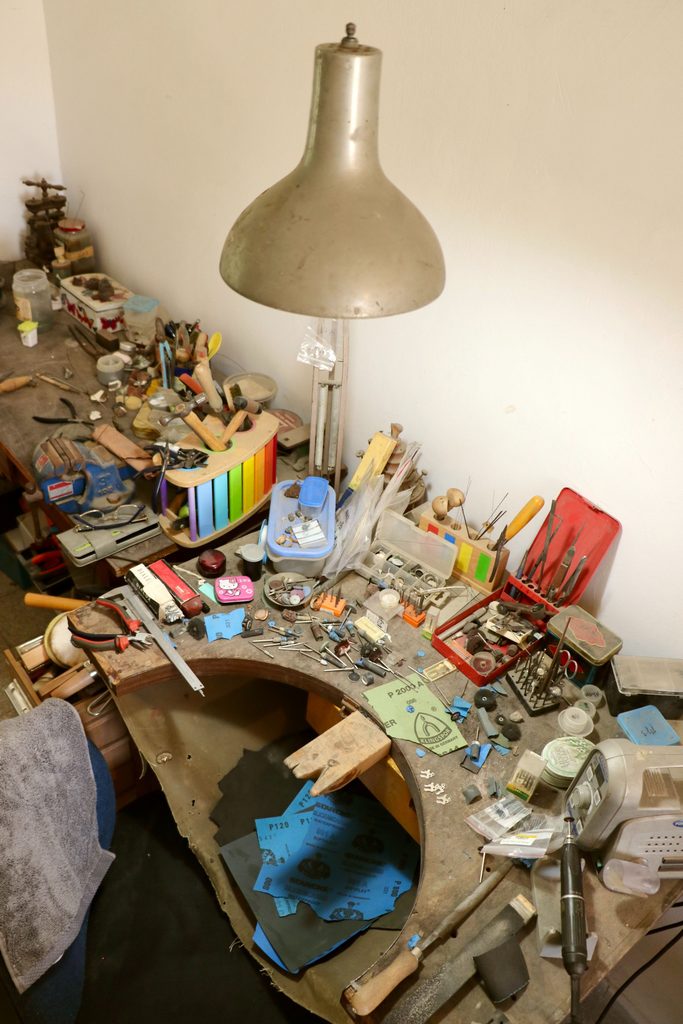
Everything stays, in a mess. Nothing goes to waste. It’s all raw material to me. There’s everything in this studio.
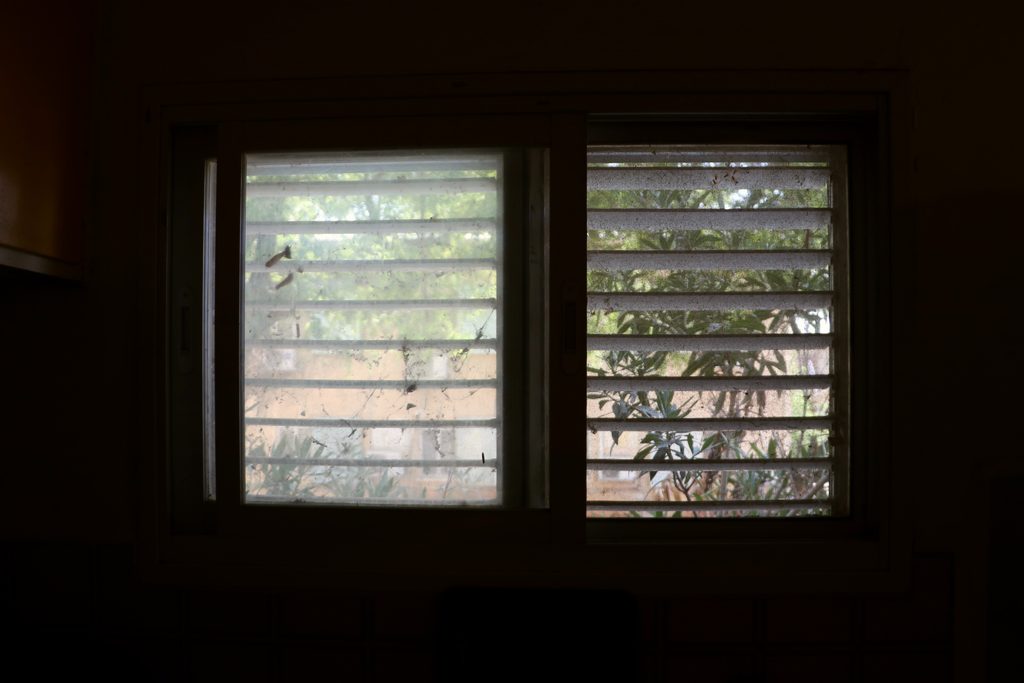
What do you see from the studio window/door?
The view – and that’s a cornerstone of my work.
Unwritten rule in your studio? Only sweep when you have no choice.
What would you change about the studio? I would make the pigeons nesting in the windows disappear.
What’s changed in the studio this past year? My sense of time has been completely scrambled over the past few years – but I’ll try. I got tons of raw materials and theoretical knowledge from Sigal Lifshitz, all waiting for me to free up emotionally and schedule-wise to figure out what to do with them. Sigal led the Goldsmithing Department at the Tel-Hai Institute for the Arts for the past 17 years and passed away at the beginning of the year. Besides that, I’m getting ready for a show at the small gallery at Beit Binyamini, opening in March, curated by Shelly Shavit and Reut Rabuah. And of course, we’re gearing up for the new year at the Goldsmithing Department at the Tel-Hai Institute for the Arts.
If you could bring one person into the studio tomorrow to work with you, who would it be? I feel very comfortable working in other people’s studios, and working at Berman Studio is a great pleasure. But I like to keep the more personal stages of my creative process to myself.
A metalsmith you admire? I admire my own students at the Goldsmithing Department at Tel-Hai. Three rough, scary, turbulent years – and they still keep showing up, still create something out of nothing, still invest in beauty and harmony and in themselves. Nothing more inspiring than that.
A peak career moment? The return to Tel Hai after the war in 2025, and the current graduates’ exhibition at MUZA as part of the Art and Design Biennale – I don’t think it’s possible to fully express how significant it is that these events are taking place at all.
What have you learned about yourself since you started?
That I’m a jeweler. It took me years to actually call myself that. The craft forces every sense to sharpen up, and lately I realized – that sensory focus is exactly what hooked me.
What is the role of the jewelry/pieces you make? Right now I’m working on 4-5 at once, all part of the ongoing project “Moses in the Basket,” which began around 2018, perhaps as I was approaching a midlife crisis. I think a lot about jewelry as inheritance, as a vessel for carrying a family story from one generation to the next. This is a collection made for my children, carrying family mythologies, protections and fears, objects and gestures that run through our veins.
Either/or
Work together or alone? Alone for metalsmithing, together for everything else – love it.
Night or day? Day. Not a night person, and mornings beat daytime if I can manage it.
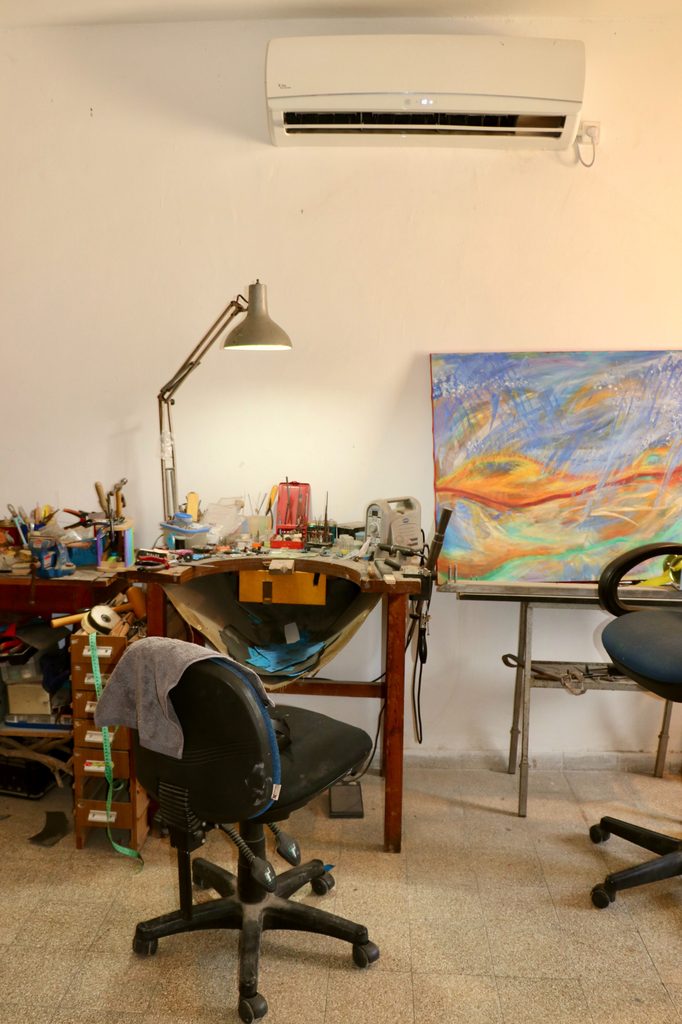
Open space or a cave-like nook? An open window.
Natural or artificial light? Both, how do you do jewelry without a desk lamp?
Quiet or music? Music. Can’t move without it – first thing I do walking into the studio.
Standing or sitting? Depends what I’m doing, but mostly sitting.
Tidy as you go, or only at the end? I don’t tidy and I’m not tidy. Only when I lose something – when there’s no choice.
Sketch in 2D first, or straight into the material? Usually both – I love drawing, depending on what I’m making. I usually make 3D sketches in metal and paper. Sometimes I start with drawing and then move to modeling on the computer.
Thank you so much, Noga, for opening the door and for the conversation. It was a pure pleasure.
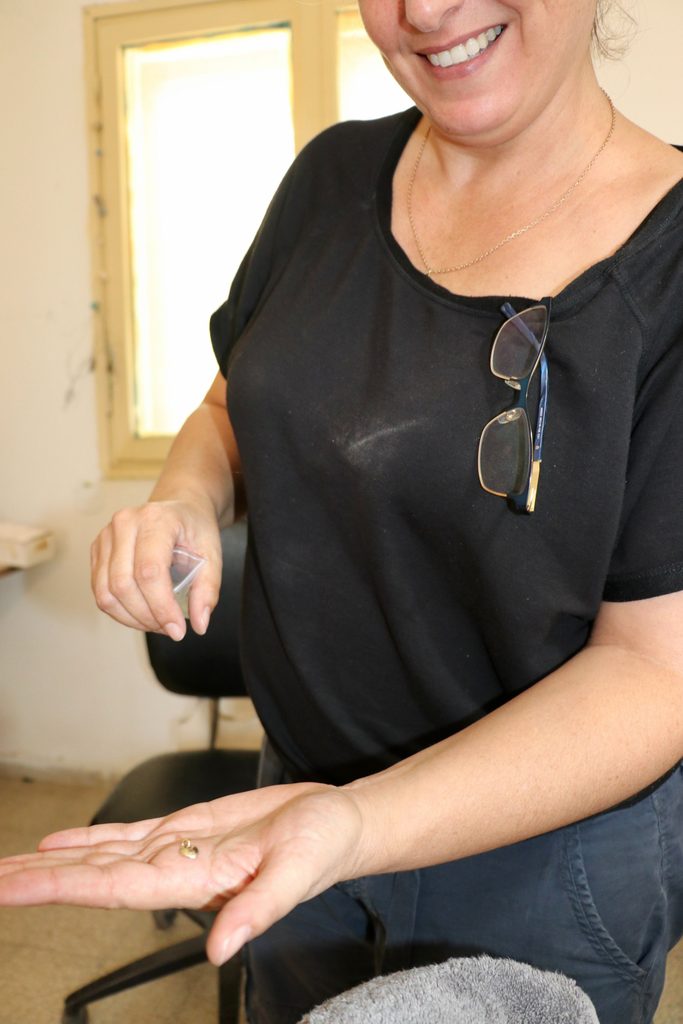
Photo: Naama Ben Porat