[Bio]
Prof. Einat Leader is a member of the Litushim editorial board.
This new section is dedicated to seminal books and texts in contemporary jewellery that have helped shape the jargon, language, thought, and history of the field in recent decades. Authored by key figures in the field, the books selected to launch this section address questions of body, material, value, ornament, politics, and visual culture, offering a perspective on contemporary jewellery as a way of thinking and acting in the world.
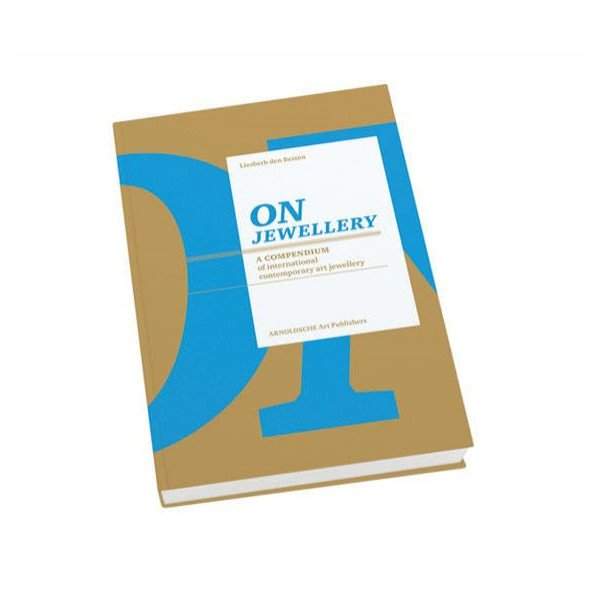
On Jewellery: A Compendium of Contemporary Jewellery, Liesbeth den Besten (Arnoldsche Art Verlagsanstalt, 2011)
In this book, Liesbeth den Besten analyzes the field of contemporary jewellery, seeking to establish it as a broad artistic and conceptual discipline rather than merely a decorative craft. She examines jewellery as an intersection between body, material, and society, addressing questions of memory, belonging, and identity. A central focus of the book is the conceptual discourse that infuses the work; ranging from how material choices and modes of wearing can carry critical and political meaning, challenge notions of value and status, and even alter how the body is perceived and experienced, to discussions on modes of display, jewellery photography, the relationship between jewellery and contemporary art, and the influence of schools, galleries, and museums on shaping the field. Alongside the conceptual discussion, the book surveys the key makers, exhibitions, and developments that have shaped the evolution of contemporary jewellery since the 1960s.
Liesbeth den Besten (1956–Present) is a Dutch researcher in the field of design and applied arts, curator, and contemporary jewellery critic, she is considered a leading authority in articulating the theory of the field over recent decades. She served as the chair of the Françoise van den Bosch Foundation and is one of the co-founders of the Art Jewelry Forum (AJF).
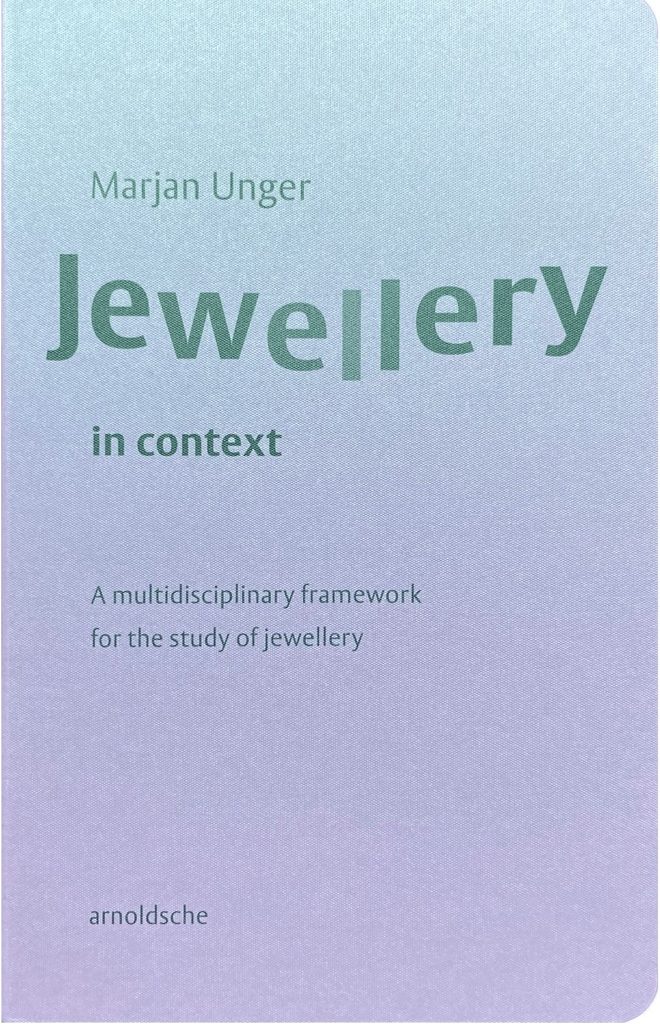
Jewellery in Context: A Multidisciplinary Framework for the Study of Jewellery, Marjan Unger (Arnoldsche Art Verlagsanstalt, 2017)
In her seminal book, Marjan Unger examines jewellery from the broad perspective of material culture, situating it within systems of economy, society, trade, ritual, fashion, and psychology. Unger asks why humans wear jewellery in the first place, and how these small objects worn on the body have accompanied human culture from its very beginnings. One of her central insights is that jewellery always operates on several levels simultaneously: as a material with economic value, as an emotional and intimate object, and as a social signifier existing within systems of power, belonging, and recognition. Through this framework, Unger demonstrates how even everyday or seemingly “simple” jewellery participates in broader structures of identity, gender, memory, and social relations.
The book also addresses the tension between material value and symbolic value, between personal ornament and the mechanisms of fashion and commerce, and the way cultural and economic shifts influence how humans attribute meaning to objects worn on the body. Unger’s multidisciplinary approach has significantly influenced the development of jewellery research in recent decades, helping to establish the field as part of a broad discourse on human culture, rather than strictly within the framework of craft or design.
Marjan Unger (1946–2018) was a Dutch art historian, lecturer, curator, and jewellery collector. Together with her husband, graphic designer Gerard Unger, she built an extensive collection of modern and contemporary jewellery, characterized by experimental pieces and makers operating outside traditional commercial frameworks. Unger taught at the Gerrit Rietveld Academie and the Sandberg Instituut, among other institutions. Her book Jewellery in Context is based on her extensive research and her doctoral dissertation, which was submitted to Leiden University in 2010. Her jewellery collection was donated to the Rijksmuseum in Amsterdam.
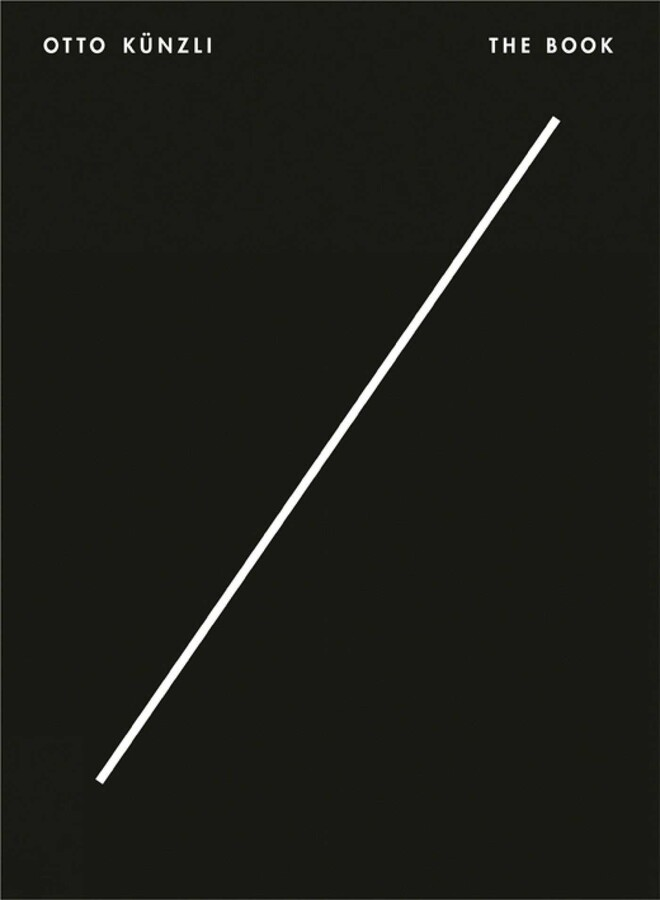
Otto Künzli: The Book, Florian Hufnagl (Arnoldsche Verlagsanstalt, 2013)
This book is a comprehensive monograph on the work of the Munich-based goldsmith and jeweller Otto Künzli, one of the central and most influential figures in the field of contemporary jewellery.
Through works, drawings, texts, and documentation of key series, the book traces how Künzli expanded the boundaries of the discipline into a realm of thought, irony, and cultural critique. Künzli is renowned for his ability to distill complex ideas into precise jewellery gestures, and for his extraordinary combination of intellectual sharpness and virtuosic technical mastery. Alongside the documentation of his works, the book also includes insights into his working processes, exhibitions, teaching, and dialogues with students and fellow makers, through which his profound influence on the evolution of the field and on generations of contemporary jewellers is made evident.
Florian Hufnagl (1948–2019) was a German art historian and curator who served for many years as the director of Die Neue Sammlung in Munich, one of the most important design museums in the world. Hufnagl was a pivotal figure in establishing contemporary jewellery as part of the discourse of contemporary art and design. Throughout his career, he forged long-standing relationships with key figures in the field, including Otto Künzli. He played a major role in shaping and presenting the discipline during the period when Munich emerged as one of the world’s premier centers for contemporary jewellery.
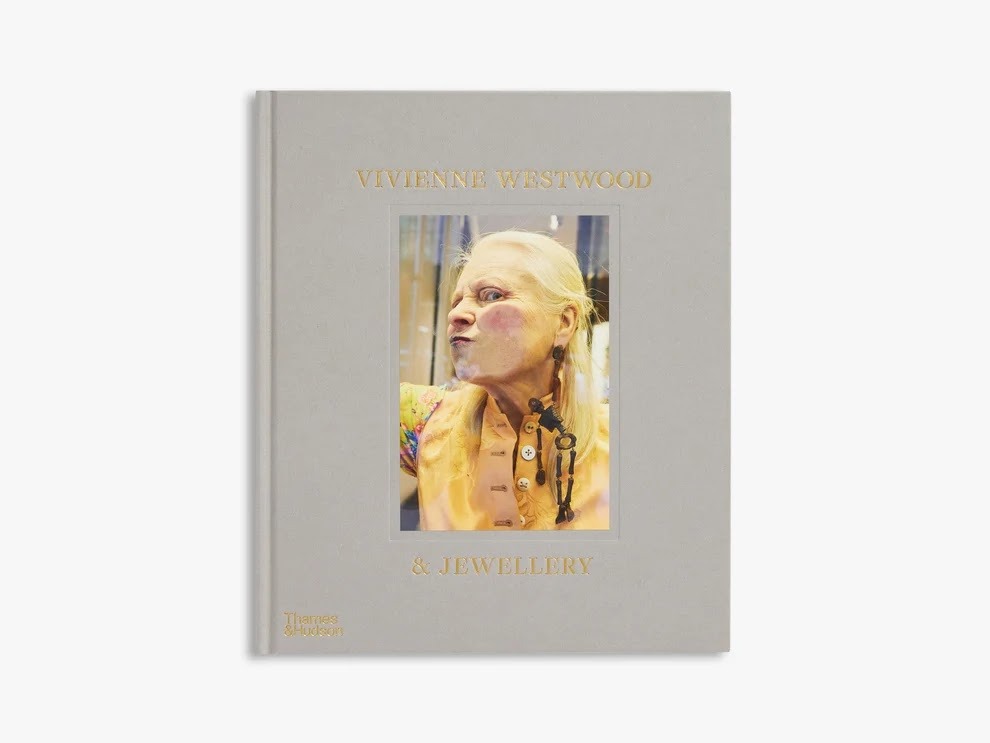
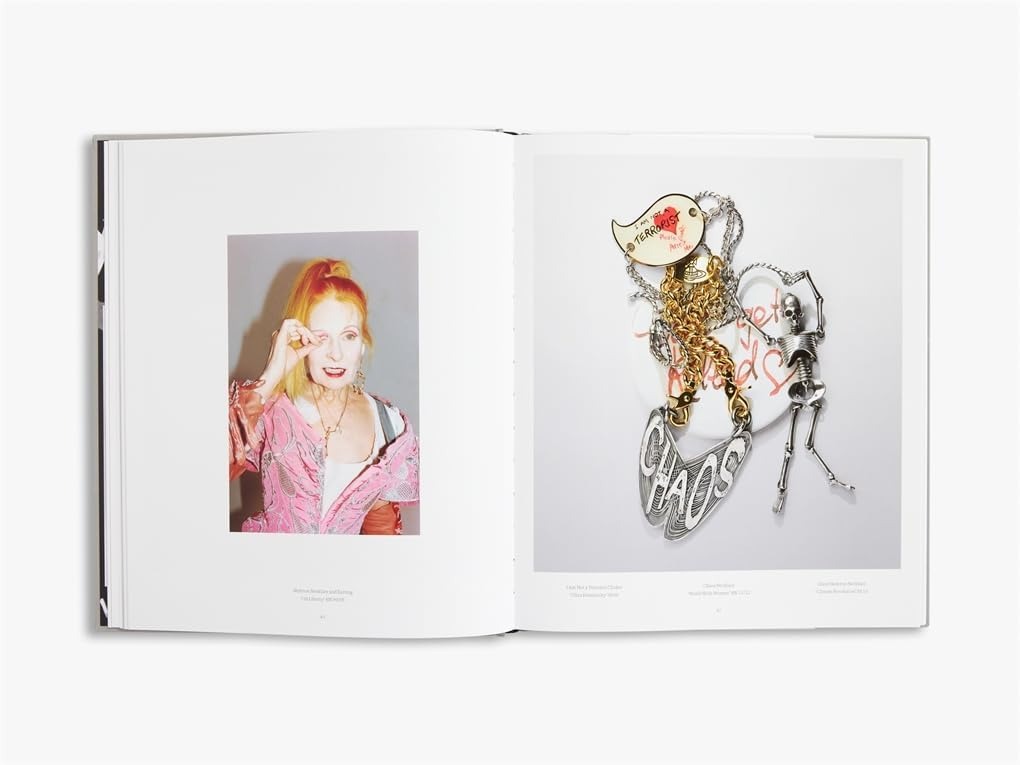
For the first time, this book focuses comprehensively on the jewellery of Vivienne Westwood, one of the most influential and radical designers in the fashion world in recent decades. While Westwood’s garments have received extensive theoretical and cultural analysis over the years, her jewellery has often remained on the margins, despite its central role in constructing the visual and political language of her work. The book traces how the designer integrated history, punk, royalty, ornament, irony, and social critique into her jewellery, creating commercial objects that simultaneously carried conceptual and critical weight. Alongside its focus on fashion and identity, her work reflects an ongoing commitment to environmental, anti-consumerist, and political issues, expressed through material choices, symbols, texts, and the subversion of familiar cultural codes.
Alexander Fury (1982–Present) is a British fashion journalist, critic, and author. Written with deep familiarity with the Westwood archive, this book places her jewellery center stage, presenting it as a core element in shaping the identity and visual language of the Westwood fashion house.